
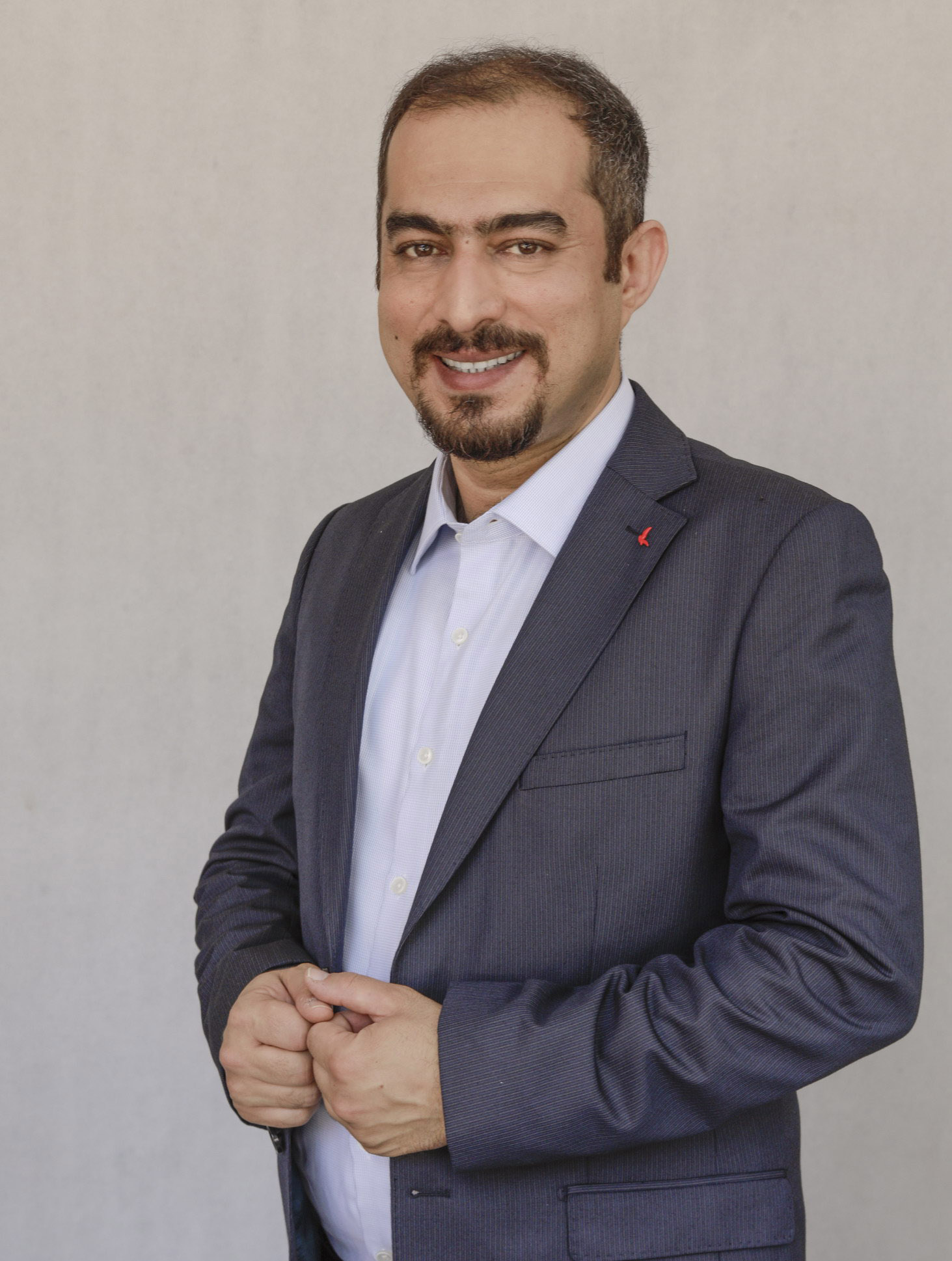

Mehdi Borjkhani, PhD
University Degree:
PhD, University of Teheran in Iran, Tehran Polytechnic in Iran
Position at ICTER:
Specialist
Research Areas:
Neuronal Nets
E-mail:
mborjkhani@ichf.edu.pl
Description
Postdoctoral fellow, his research activity includes modeling the neuronal nets created from a multitude of different neuronal populations and data analysis.
Publication list
- „Intrinsic chaos control in cortical circuits: A minimal E-I-M rate model for primary visual cortex.”. Borjkhani, M., Sharif, M.A. , Borjkhani, H (2026). Journal of Computational Neuroscience 10.1007/s10827-026-00938-5 (opens in new tab)
- „NMDA receptor kinetics drive distinct routes to chaotic firing in pyramidal neurons”. Borjkhani M, Borjkhani H, Sharif MA, Bahrami F, Janahmadi M (2026). Frontiers in Computational Neuroscience 10.3389/fncom.2026.1753444 (opens in new tab)
- „Magnesium neuroprotection in retinal ganglion cells: A computational study of frequency-dependent therapeutic windows and intervention timing”. Mehdi Borjkhani ,Hadi Borjkhani,Morteza A. Sharif (2026). PLOS ONE 10.1371/journal.pone.0348068 (opens in new tab)
- „Population-level neural rejuvenation dynamics in addiction: a computational framework for understanding developmental plasticity reactivation”. Borjkhani M, Borjkhani H, Sharif MA (2026). Frontiers in Computational Neuroscience 10.3389/fncom.2026.1753417 (opens in new tab)
- „Propagation length enhancement of surface plasmon polaritons in ultrafine Au nanodisk array, the role of kinky breather and periodic lump”. Morteza A. Sharif, Kousha Hadi, Mehdi Borjkhani (2022). Physica B: Condensed Matter 10.1016/j.physb.2022.413768 (opens in new tab)
Research projects
Research groups
Parallel Interferometry and Computational Optics
Research Group Leader
Dawid Borycki
Coordinator
Dominika Życka-Malesa
Our group focuses on the development of advanced optical methods for functional imaging and sensing. Our mission is to strengthen and continue Polish traditions in Fourier-domain optical coherence tomography (FD-OCT) and diffuse optics.
We use electrophysiology for investigating the system of local and distant communication between populations of neurons responsible for information processing.